

The Longest Week of My Year
Over Labor Day weekend, Brent and I traveled across the country to Washington state for a special pilgrimage, one affectionately known among Dave Matthews Band fans as “Labor Dave Weekend.” Each year, tens of thousands of fans descend on the Gorge Amphitheatre for three nights of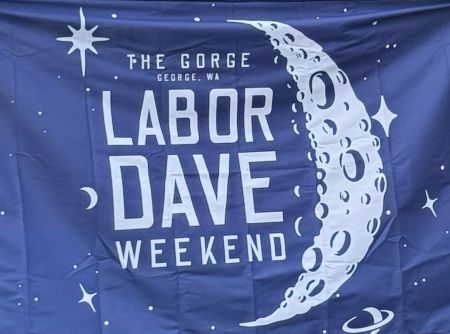 music in one of the most spectacular concert settings in the country.
Our week included a cross-country flight, renting and provisioning a 30-foot RV and then making the three-hour drive from Seattle to the Gorge. We traveled through forested mountains, watched the scenery change dramatically to golden hills, enormous wind turbines and wide-open desert as we approached the Columbia River.
We arrived at the Gorge campgrounds and settled in for five days of camping and three nights of concerts. The trip flew by. But by the time we returned home, that one week felt bigger than entire months at home.
A few days after returning home, I read an article by retired neurosurgeon Dr. Brian Hoeflinger about why life seems to speed up as we get older. His explanation was fascinating and gave me a new way to think about our week away.
Our brains don’t measure time in the same direct way that we measure many physical things. We can measure distance with a ruler and sound in decibels, but the brain has no single sensory organ for detecting the passage of time. Seconds, hours and calendars are systems humans created to organize something we cannot see, hear or touch. Instead, our experience of time is shaped by attention, emotion, change and memory.
Our brains also don’t remember our lives as one continuous recording. They are more likely to preserve moments that are new, unexpected, emotional or different from what came before. When most of our days follow familiar patterns, fewer individual experiences stand out. Weeks and months begin to blur together.
That doesn’t mean nothing happened. It means much of what happened looked a lot like what happened the day before. And the day before that.
Think about an ordinary week. You wake up around the same time, drink coffee from the same mug, drive the same roads and sit in the same chair at work. You answer emails, run errands, prepare meals and watch TV. The individual days may be full, but when you look back several months later, how much of that week can you actually recall? A busy week isn’t necessarily a memorable one.
Our time at the Gorge was different. Nearly everything required our attention because almost nothing was routine. I can already replay our afternoon at the winery next door, meeting our neighbors around the campground, making coffee each morning with a French press and creating delicious and complete dinners with limited supplies on a tiny grill. Even taking a shower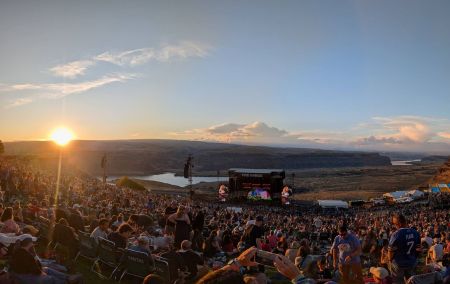 became a new experience. Then there were the concerts themselves, with more than 27,000 people gathered in an extraordinary place known as “Heaven’s Amphitheater” for three nights of Dave Mathews Band. The nights don’t blend together, either. Each one had its own unique set list of music, mood and memorable moments. The entire week is already vividly imprinted in my memory. No wonder one week felt like so much more.
There’s apparently a name for this phenomenon: the “holiday paradox.” Time can feel as though it’s flying while we’re enjoying an experience, yet that same period can feel surprisingly long when we look back on it. New surroundings and experiences create more distinctive memories, giving us more mental landmarks to revisit later.
The connection between novelty and memory also helps explain why so many childhood experiences stay with us. As children, so much of life was new. The first days of school, learning to ride a bike, getting your first job or driving somewhere alone for the first time became a landmark in your memory. We were constantly encountering things we had never seen, done or understood before.
As adults, we move through much of life on autopilot. Because our days follow familiar patterns, our brains have fewer reasons to record them as distinct experiences. The weeks don’t just blend together. Many barely register at all.
The good news is that memorable experiences don’t require a cross-country adventure. But they do require more than simply changing our routine. Choose something different enough to hold your attention. Take a morning walk on the beach and stop to watch the sun rise. Notice 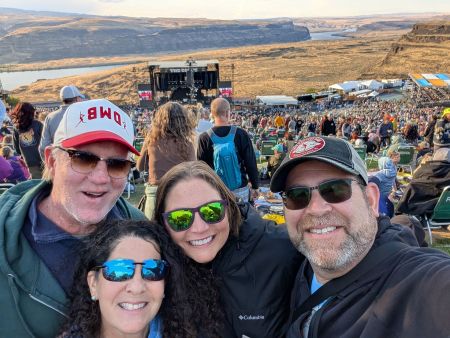 the colors, listen to the waves and take in the morning air. Give your brain a reason to remember where you were and how the moment felt.
When you spend time with an old friend, put down your phone and be fully present in the conversation. Take the photo, not simply to post it, but to preserve it. Pause and consciously tell yourself, “I want to remember this moment.” That kind of attention matters. We’re so often physically present while our minds are somewhere else, thinking about what we need to do next. Slowing down time begins with noticing the life we’re already living.
As I approach a milestone birthday, I’m more aware of how quickly the years seem to pass. I don’t want to spend them on autopilot. I want to be more deliberate about creating and noticing moments that stand apart from all the others. That’s how we give our brains more to remember. And that may be the closest we’ll ever come to slowing down time.
Do you have ways to help you imprint your own special moments? What is your most vivid memory? Email me at stacy@fireflyforyou.com